
What a Green Beret Can Teach You About Success, Discipline, and Choosing Hard with Kevin “The Terminator” Smith.
Every once in a while, I sit down with someone whose life experience forces you to rethink what "hard" actually means.
Kevin Smith is one of those people.
Most people know him today as the founder of Terminator Training Method, where he coaches aspiring Special Forces operators, tactical athletes, and high performers looking to prepare for some of the most demanding selection processes in the military. But before he was a coach, Kevin spent over a decade serving as a Green Beret.
And while most people immediately want to talk about the training, the rucking, the sleep deprivation, and the brutal selection process, what stood out most to me during our conversation wasn't the physical side of things.
It was the mindset.
Because the truth is, the lessons that help someone survive Special Forces selection aren't all that different from the lessons that help someone build a business, lose 50 pounds, become a better coach, or create a life they're proud of.
The environments are different, but the principles are the same.
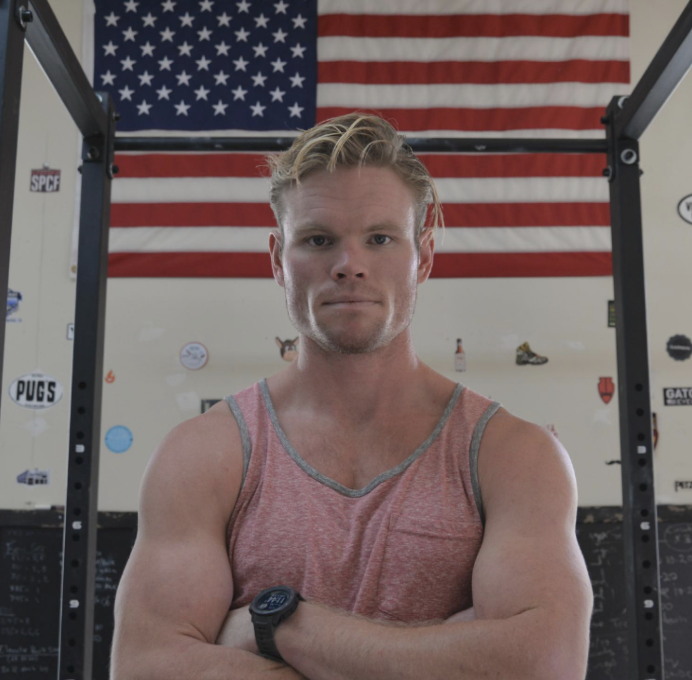
You can catch the full episode of Choose Hard with Kevin “The Terminator” Smith here:
There Was No Plan B
One of the things that immediately jumped out to me was how similar Kevin's transition into entrepreneurship felt to my own.
When Kevin left the military after 12 years, he wasn't leaving with some massive online coaching business waiting for him on the other side. He wasn't sitting on a giant audience. He wasn't making life-changing money online.
He was taking a risk.
A big one.
For years, he had been creating content, studying fitness, writing programs, and helping people in his spare time. Eventually he realized something that many people are afraid to admit:
He was more excited about building something of his own than he was about staying where he was.
So he made the jump.
No safety net.
No guarantee.
No certainty.
Just belief in the work he had been putting in behind the scenes.
That resonated with me because that's exactly how most meaningful transitions happen.
People love hearing success stories after the fact. What they don't talk about enough is the uncertainty that comes before them.
The season where nobody knows your name.
The season where you're putting in work that isn't paying off yet.
The season where everyone around you thinks you're crazy.
The reality is that confidence usually doesn't come first.
Action comes first.
Confidence is often just the byproduct of proving to yourself that you'll keep showing up.
The Difference Between Motivation and Commitment
One thing Kevin said stuck with me throughout the entire conversation.
During Special Forces training, there are countless moments where you simply don't feel like doing what needs to be done.
You're exhausted.
You're uncomfortable.
You're frustrated.
You don't want to wake up.
You don't want to train.
You don't want to carry the load anymore.
But the mission doesn't care how you feel.
The standard doesn't change because you're tired.
And that's something I think a lot of people need to hear.
Because we're living in a world that constantly encourages people to wait until they "feel ready."
The problem is that the people who achieve extraordinary things rarely feel ready.
They just understand that emotions are temporary.
The goal is permanent.
Kevin described it as learning not to make emotional decisions.
That's a skill.
And it's one of the most valuable skills anyone can develop.
Whether you're preparing for Special Forces selection or trying to stick to your nutrition plan on a Friday night, the challenge is often the same:
Can you keep moving forward even when you don't feel like it?
Why So Many People Are Training Wrong
As expected, we spent plenty of time talking about training, and Kevin's answer surprised me.
Most people assume the biggest mistake tactical athletes make is that they don't train hard enough. According to Kevin, that's usually not the problem.
The problem is that they aren't training specifically enough.
Someone wants to get better at running but barely runs.
Someone wants to improve endurance but spends all their time lifting.
Someone wants to dominate a selection course yet structures their training around what they enjoy rather than what the event actually demands.
This is something I see constantly in the fitness industry too.
People chase novelty, variety, entertainment.
But progress usually comes from repeatedly doing the things that matter most, and the fundamentals are often boring.
That doesn't make them less effective. In fact, it usually makes them more effective.
The athletes who improve the fastest are rarely the ones searching for secret hacks.
They're the ones willing to execute the basics consistently.
The Most Underrated Performance Enhancer on Earth
At one point we started talking about recovery.
Predictably, sleep came up. And just like every high performer I've ever interviewed, Kevin immediately emphasized its importance.
The funny thing about sleep is that everyone knows it matters.
Nobody argues against it. Nobody says, "Actually, I think being exhausted is a great strategy." Yet millions of people continue treating sleep like an optional activity.
Kevin described sleep as the greatest legal performance enhancer available. I agree.
The challenge is that sleep doesn't feel exciting.
There's no dopamine hit.No flashy social media post. No new gadget. No secret protocol.
Just a dark room, consistency, and discipline.
But if you're serious about performance, recovery isn't optional.
The best athletes in the world understand that adaptation happens after the work.
Not during it.
The Skill Nobody Practices Anymore
One of my favorite parts of our conversation had nothing to do with training.
It had everything to do with communication.
As a Green Beret, Kevin spent years building relationships with people from different cultures, backgrounds, and countries.
He explained that much of the job came down to communication.
Building trust.
Creating rapport.
Learning how to connect with people.
That struck me because we're seeing a growing number of people who spend hours communicating through screens and almost no time practicing actual conversation.
People are becoming physically connected and socially disconnected.
Kevin talked about intentionally practicing conversations with strangers, learning how to ask better questions, and becoming comfortable with rejection.
Think about how valuable that skill set is today.
Business owners need it. Coaches need it. Leaders need it. Parents need it.
The ability to connect with another human being is becoming increasingly rare, which means it's becoming increasingly valuable.
Why Toughness Isn't What Most People Think
When most people hear the phrase "mental toughness," they picture suffering.
They picture grinding.
They picture someone screaming through pain.
And while there's certainly a place for grit, Kevin's perspective was a little different.
He talked about pacing, restraint, discipline, and patience.
In fact, he mentioned that many high-achieving Type-A personalities struggle because they go too hard, too fast, too often.
They sprint the first mile of a five-mile race.
They attack every workout like it's a competition.
They refuse to slow down long enough to recover.
Ironically, that mindset often limits progress.
Sometimes toughness looks like pushing harder.
Sometimes toughness looks like holding back.
The key is knowing which one is required.
Building a Body That Lasts
One area where Kevin and I found a lot of common ground was strength training.
For years, the fitness industry convinced people that every serious lifter needed to obsess over squat, bench, and deadlift numbers.
Kevin challenged that idea.
Not because strength isn't important.
Because context matters.
The goal isn't to collect exercises.
The goal is to become more capable, resilient, and durable.
For tactical athletes, that often means prioritizing movements that build strength without creating unnecessary wear and tear.
For everyday people, it means understanding that training should support your life, not break you down.
A bigger deadlift doesn't automatically make you healthier.
A stronger body doesn't automatically come from more punishment.
The best programs build capacity while preserving longevity.
And that's a lesson far more people need to hear.
The Real Meaning of Choose Hard
As our conversation wrapped up, I found myself thinking about something that comes up constantly on this podcast.
Most people assume "Choose Hard" means choosing suffering.
It doesn't.
Choosing hard means choosing growth.
It means choosing the path that leads somewhere worthwhile, even when it's uncomfortable.
For Kevin, that meant pursuing Special Forces.
Later, it meant leaving the military to build a business.
For someone else, it might mean starting a fitness journey.
Having a difficult conversation.
Taking ownership of their health.
Launching the business they've been talking about for years.
The specifics don't matter.
The principle does.
Because the truth is simple:
The easy choice usually provides immediate comfort.
The hard choice usually provides long-term fulfillment.
And if this conversation with Kevin reinforced anything, it's that the people who accomplish extraordinary things aren't necessarily more talented than everyone else.
They're just willing to keep choosing the harder path long enough for it to become who they are.
That's where real confidence comes from.
That's where real growth happens.
And that's exactly why we Choose Hard.
Here’s the full Episode with Kevin Smith on Apple: